


TL;DR:
- Effective on-course gear management involves organizing and routinely accessing golf equipment to maintain focus and pace. Proper bag packing, fixed pocket assignments for high-use items, and disciplined routines like quick pre-round checks significantly reduce delays. Maintaining and rotating essential gear seasonally ensures optimal performance and enhances overall game efficiency.
Effective on-course essentials management is the practice of organizing, placing, and routinely accessing your golf gear so that nothing slows your round or breaks your focus. Most pace-of-play problems trace back to systemic delays like searching and poor gear organization, not to players rushing. Your bag, your pockets, and your between-shot habits form a system. When that system works, you play faster, think clearer, and spend less energy on logistics. This article covers the full on-course essentials setup guide: bag organization, gear selection, in-play routines, and long-term maintenance.
How to manage on-course essentials through bag organization
The foundation of managing equipment on the course starts with how you pack your bag before you ever reach the first tee. A disorganized bag feels like a junk drawer during a round. You pull out the wrong club, fumble for a tee, or waste 30 seconds locating a ball marker while your playing partners wait.
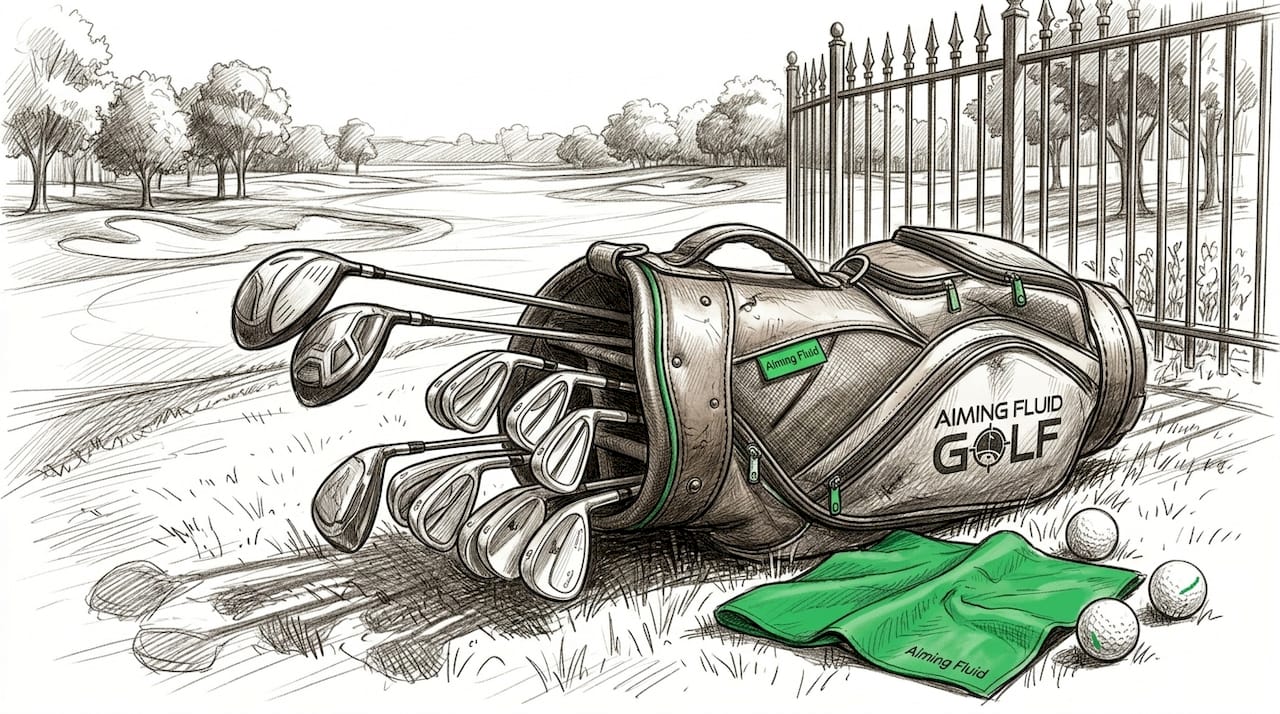
Sun Mountain recommends placing your longest clubs at the back or bottom of the bag and shorter clubs toward the front or top, depending on whether you carry or cart. This arrangement prevents shaft tangling and keeps the bag balanced. Most modern bags use 4-way, 6-way, or 14-way divider systems. A 14-way divider gives every club its own slot, which eliminates tangling entirely and makes club selection faster.
Pocket assignment: the core of access speed
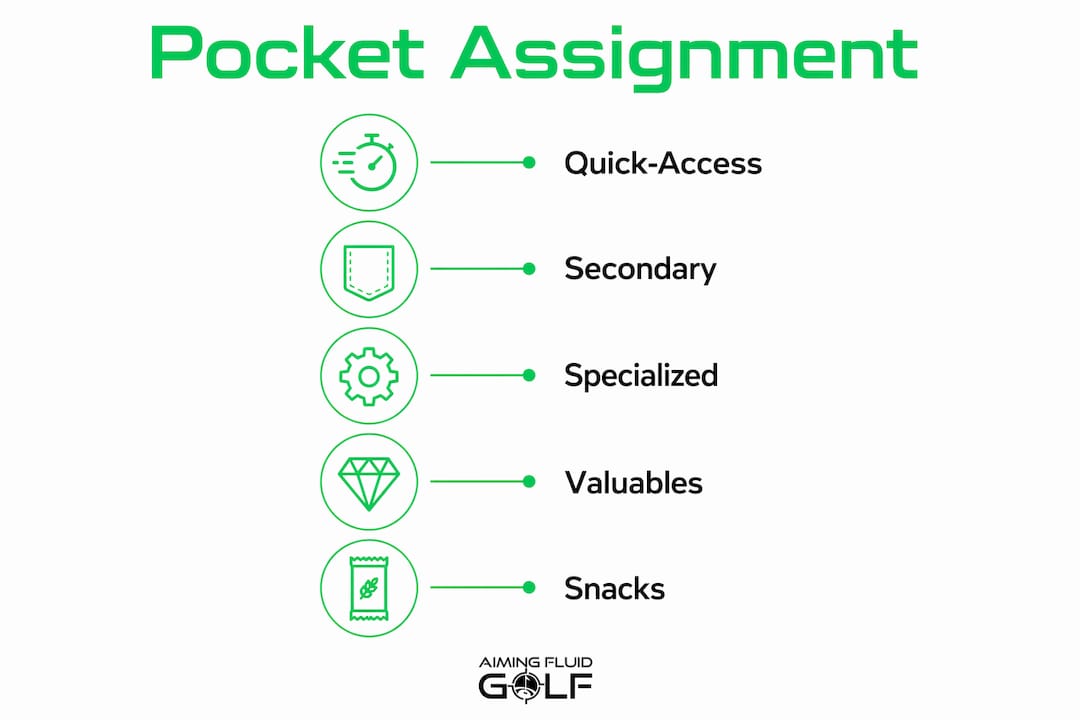
Beyond clubs, pocket assignment determines how quickly you retrieve small items mid-round. Sun Mountain and Lazrus Golf both recommend reserving your most accessible pockets exclusively for high-frequency items: tees, ball markers, and divot repair tools. These items leave your hand and return to your bag dozens of times per round. Placing them in a deep or inconvenient pocket adds up to significant lost time.
Use secondary pockets for valuables, a rain jacket, snacks, and tech devices. A dedicated tech pocket for your rangefinder or GPS unit prevents the disruptive fumbling that slows pre-shot routines. GolfersAuthority confirms that positioning rangefinders in quick-reach side pockets avoids bending and searching during shots, which directly supports pace.
| Pocket type | Recommended contents |
|---|---|
| Top/front quick-access | Tees, ball markers, divot tools, spare balls |
| Side zip pocket | Rangefinder or GPS device |
| Large main pocket | Extra apparel, rain gear, snacks |
| Valuables pocket | Phone, wallet, keys, watch |
| Insulated pocket | Water bottle, energy drinks |
Pro Tip: Do a monthly bag audit lasting no more than five minutes. Remove receipts, broken tees, empty wrappers, and any item you have not used in three rounds. A lighter, cleaner bag is faster to navigate and easier to carry.
What essential gear should you carry on the course?
A reliable golf course essentials checklist covers more than just clubs. The baseline gear every golfer needs includes the following:
- Golf balls: Carry at least six, more for unfamiliar or heavily wooded courses
- Tees: Pack a minimum of ten, mixing standard and low-profile options
- Ball markers: Two or three flat markers prevent delays on the green
- Divot repair tool: One per round minimum, kept in a dedicated pocket
- Golf glove: Carry a backup glove, especially in humid or wet conditions
- Towel: Attached to the bag for instant access between shots
- Sun protection: SPF 30 or higher sunscreen plus UV-blocking eyewear
- Rangefinder or GPS device: Stored in a side pocket for one-motion retrieval
Golf-Alcanada’s tournament checklist identifies all of these items as critical to performing well during competitive rounds. Missing even one, like a spare glove on a wet day, creates a distraction that affects decision-making.
Hydration and energy: the overlooked essentials
Hydration is not optional gear. Golf-Alcanada recommends at least 1.5 liters of water or isotonic drinks per round, paired with healthy snacks for sustained energy. A four-hour round in warm weather depletes concentration well before the back nine if you skip fluids. Pack a small insulated sleeve or use your bag’s insulated pocket for a water bottle and an electrolyte drink. Add a protein bar or a handful of nuts for the turn.
Weather preparation rounds out your essential gear for golf. A compact rain jacket, an extra layer for cold mornings, and a spare dry glove belong in your bag regardless of the forecast. Conditions change faster on a course than on a weather app.
How do on-course routines improve gear management and pace?
Habits are the mechanism that converts good bag organization into actual time savings during a round. Without consistent routines, even a perfectly packed bag gets disorganized by hole four. The following sequence builds a repeatable system for managing equipment on the course.
- Pre-shot pocket check: Before approaching the tee or fairway, confirm your tee, ball marker, and divot tool are in your front pocket. This takes three seconds and prevents mid-shot searching.
- Single-pocket habit: SOKIM advises keeping one dedicated quick-access pocket for tees, divot tools, and spare balls. Return every item to that same pocket after each use. This habit eliminates the mid-round reorganization that slows groups down.
- Immediate club return: After every shot, return the club to its assigned divider slot before walking toward the ball. Leaving clubs out of position leads to misplaced irons and wasted time at the next shot.
- Cart positioning: Park the cart on the side of the green closest to the next tee. This single habit, recommended by Lynx Golf as part of pace-of-play discipline, saves 30 to 60 seconds per hole.
- Ball search discipline: The Rules of Golf allow a 3-minute ball search limit. Hit a provisional ball immediately when there is any doubt about finding your original. Waiting to search before hitting a provisional is the single biggest pace-of-play mistake recreational golfers make.
- Green efficiency: Read your putt while others are putting. Where local rules allow continuous putting, finish out rather than marking and waiting. Both habits reduce green time by one to two minutes per hole.
Pro Tip: Treat your pre-round bag check like a pilot’s preflight checklist. SOKIM recommends a 60 to 90 second gear check before every round to confirm critical items are in their assigned pockets. This single habit prevents mid-round interruptions that cost you time and focus.
Strategic play also reduces unnecessary gear use. Golf.com notes that better course management reduces risky shots, which in turn reduces the frequency of searching for lost balls and switching clubs repeatedly. Fewer gear interactions per hole means a faster, more focused round.
How to maintain your on-course setup for long-term performance
A well-organized bag degrades over time without deliberate maintenance. Gear accumulates, items wear out, and seasonal conditions demand different equipment. The following practices keep your setup performing at the same level round after round.
- Weekly pocket reset: After each round, return all items to their assigned pockets. Empty wrappers, broken tees, and loose change accumulate fast and turn a clean system into a cluttered one.
- Glove and towel replacement: Replace gloves when the grip surface shows wear or when the material stiffens. A worn glove reduces club control and increases the chance of grip-related errors. Swap towels when they stop absorbing moisture effectively.
- Seasonal gear rotation: Swap out your rain jacket, thermal layer, and hand warmers at the start of each season. Store off-season apparel separately so your bag stays light and relevant to current conditions.
- Hydration and snack refresh: Restock your water and snacks before every round, not just when you notice they are missing. Running out of fluids on hole 14 is a preparation failure, not bad luck.
- Tech device maintenance: Charge your rangefinder or GPS unit the night before every round. A dead device mid-round forces you to pace distances manually, which slows pre-shot routines and increases decision uncertainty.
The PGA’s on-course game assessment framework confirms that course professionals integrate gear readiness directly into performance planning. Treating your bag setup as part of your game plan, not an afterthought, is what separates organized golfers from those who spend rounds searching and adjusting.
Key takeaways
Organized gear management is the most direct way to reduce pace-of-play delays and maintain focus throughout a round.
| Point | Details |
|---|---|
| Assign every item a permanent pocket | Fixed pocket assignments eliminate searching and keep high-use gear instantly accessible. |
| Build a pre-round checklist habit | A 60 to 90 second bag check before each round prevents mid-round interruptions and delays. |
| Follow the 3-minute ball search rule | Hit a provisional ball immediately to protect pace and comply with the Rules of Golf. |
| Restock and rotate gear seasonally | Swap weather gear, replace worn gloves and towels, and refresh hydration supplies each season. |
| Use a single quick-access pocket | One dedicated pocket for tees, markers, and divot tools removes the need for mid-round reorganization. |
What disciplined gear management actually does for your game
I have watched golfers with better swings lose strokes to players with tighter systems. The difference is not talent. It is preparation. When your gear is where you expect it, your brain stops solving logistics problems and starts solving golf problems.
The biggest shift I noticed in my own game came from the single-pocket habit. Before I committed to it, I was patting down three pockets before every tee shot. That sounds minor, but it breaks your pre-shot focus at exactly the wrong moment. Once I locked tees, a marker, and a divot tool into one front pocket and returned them there after every use, the between-shot routine became automatic. That mental bandwidth went back into reading the course.
The other underrated habit is the provisional ball. Most recreational golfers treat it as an admission of failure. It is the opposite. Hitting a provisional immediately and moving on is what course management actually looks like in practice. It protects your score, your pace, and your composure.
My honest advice: do not try to overhaul your entire system at once. Pick one habit from this article, practice it for three rounds, and then add another. Gear organization is a skill, and it compounds the same way swing mechanics do.
— Gary
Gear built for the system you are building

The habits and organization strategies in this article only work as well as the gear supporting them. Aimingfluidgolf designs accessories specifically for golfers who take on-course efficiency seriously. The magnetic towel system attaches and detaches in one motion, so your towel is always accessible without digging through your bag. Precision golf tees and the 5-in-1 divot tool are built to live in your quick-access pocket and perform every round. Browse the full range of expert-picked golf accessories to build a setup that matches the system you are developing.
FAQ
What is the most important habit for on-course gear management?
The single-pocket habit is the most impactful routine. Keeping tees, ball markers, and divot tools in one dedicated pocket and returning them there after every use eliminates searching and keeps your pre-shot routine consistent.
How should I organize my golf bag for faster play?
Place longest clubs at the back and shorter clubs toward the front, and assign each pocket a fixed category of items. Sun Mountain’s packing guide recommends this arrangement for both balance and retrieval speed.
How much water should I carry during a round?
Carry at least 1.5 liters of water or isotonic drinks per round. Golf-Alcanada identifies hydration as critical to maintaining focus and energy across all 18 holes, particularly in warm or humid conditions.
What is the ball search time limit under the Rules of Golf?
The Rules of Golf set a 3-minute limit for searching for a lost ball. Hitting a provisional ball immediately when there is doubt about finding your original protects both your score and the pace of play for your group.
How often should I audit my golf bag?
A monthly audit of five minutes or less is sufficient for most golfers. Remove broken tees, empty wrappers, and unused items, and confirm that all essential gear is in its assigned pocket before your next round.
Recommended
- Master on-course gear management for peak golf performance – Aiming Fluid Golf
- Golf Bag Essentials Hub: What Every Golfer Should Carry (Beginner to S – Aiming Fluid Golf
- 9 Simple Golf Tips to Instantly Improve Your Game (Rick Shiels Breakdo – Aiming Fluid Golf
- How quick-access golf tools streamline your game – Aiming Fluid Golf


