


TL;DR:
- Proper club rotation and organization improve retrieval speed, protection, and on-course performance.
- Using full-length dividers and structured setups helps prevent equipment clutter and damage.
- Advanced golfers analyze gaps, conditions, and track data for optimal club and gear management.
Fumbling through a disorganized bag mid-round is more than frustrating—it breaks concentration, slows pace of play, and costs you the mental clarity needed to execute under pressure. Most golfers carry the right clubs but place them in the wrong order, rotate them without a system, or skip rotation entirely until performance suffers. This guide walks through the complete process of organizing and rotating your golf gear with precision, from understanding the fundamentals to applying advanced tactics used by competitive players. Every step is designed to translate directly into faster retrieval, better club protection, and more consistent on-course performance.
Table of Contents
- Understand club rotation and gear organization essentials
- How to set up your golf bag: Step-by-step rotation routine
- Advanced rotation tactics for competitive golfers
- Troubleshooting common mistakes and optimizing your routine
- Why most golfers overlook gear rotation—and how it truly changes your game
- The next step: Upgrade your golf game with high-performance accessories
- Frequently asked questions
Key Takeaways
| Point | Details |
|---|---|
| Maximize club rotation | Strategic club rotation improves performance by adapting your setup to specific course conditions and play style. |
| Organize for efficiency | Arranging clubs and accessories with purpose ensures quick access, protection, and smoother gameplay. |
| Leverage accessories | High-performance gear like full-length dividers and utility pouches keep your setup optimized and stress-free. |
| Track and refine routines | Using apps or checklists to monitor gear rotation helps avoid mistakes and maintain long-term efficiency. |
Understand club rotation and gear organization essentials
Club rotation is not simply swapping clubs when one breaks or feels off. It is a deliberate process of adjusting your 14-club configuration based on course layout, playing conditions, and performance data. According to Golf Monthly, club rotation involves swapping clubs in and out of the 14-club limit based on course, conditions, or performance data, with competitive players testing and rotating hybrids and wedges for gapping while tracking usage to prioritize placement.
For amateur golfers, this might mean choosing between a 3-hybrid and a 5-wood based on whether a course demands more punch shots under tree lines or high-trajectory approaches. For competitive players, the analysis goes further, incorporating distance gaps between clubs, spin rate data, and specific hole layouts that reward or punish certain trajectories.
Effective organizing your golf bag starts with understanding what each section of your bag is designed to do. Most modern bags divide storage into distinct zones: a top section for long clubs, a middle section for mid-irons, a lower section for scoring clubs, and dedicated pockets for accessories. When golfers ignore this structure, the bag feels like a junk drawer—clubs clatter together, grips wear faster, and retrieval becomes guesswork.
Key organizational accessories to have in place:
- Full-length dividers to prevent shaft and grip contact between clubs
- Utility pouches for tees, ball markers, divot tools, and rangefinder
- Magnetic towels for instant access without digging through pockets
- Valuables pocket with secure closure for phone, wallet, and keys
- Insulated pocket for drinks and snacks on longer rounds
Here is a direct comparison of how amateurs and competitive golfers typically approach gear organization:
| Factor | Amateur approach | Competitive approach |
|---|---|---|
| Club selection | Fixed set, rarely adjusted | Rotated per course and conditions |
| Bag layout | General grouping | Strict sequential placement |
| Accessory management | Loose items in pockets | Dedicated zones for each item |
| Rotation tracking | None or informal | Apps or written inventory logs |
| Divider type | Basic top dividers | Full-length individual dividers |
Pro Tip: Before each round, take 90 seconds to walk through your bag from top to bottom. Confirm every club is in its correct slot and every pocket contains what it should. This single habit eliminates most retrieval errors before they happen.
Applying gear management strategies consistently is what separates golfers who feel prepared from those who feel reactive. Organization is not a one-time setup. It is a repeatable system that should be reviewed before every round.
How to set up your golf bag: Step-by-step rotation routine
With the core concepts established, the next step is executing a precise bag setup. The sequence you place clubs in directly affects how quickly you can retrieve them, how well they are protected during transport, and how efficiently you can make mid-round swaps when conditions change.
For 14-way bags, each club gets an individual full-length divider. The recommended placement sequence is: top row for driver, 3-wood, and 5-wood; middle rows for irons arranged by loft from long to short; and the bottom row for wedges and putter, ideally in a dedicated putter well if the bag includes one.
Step-by-step bag setup routine:
- Empty the bag completely. Start fresh. Remove every club and every accessory so you can assess what belongs and what has accumulated as clutter.
- Lay out your 14 clubs in order. Arrange them on the ground from driver down to putter. Identify any gaps in your distance coverage before placing them.
- Load the top row first. Driver goes in the far back slot, followed by fairway woods in descending loft order. These are the longest clubs and need the most protection during carry.
- Place long irons and hybrids in the upper-middle row. If you carry a 3-iron, 4-iron, or hybrid, these go here. Keep hybrids adjacent to the fairway woods for logical flow.
- Fill the lower-middle rows with mid and short irons. Arrange 5-iron through 9-iron in loft sequence. Each club should slide into its own divider channel without touching adjacent clubs.
- Place wedges and putter in the bottom row. Pitching wedge, gap wedge, sand wedge, and lob wedge go here in loft order. The putter goes in the dedicated well or the most accessible bottom slot.
- Organize accessories by pocket function. Tees and ball markers in the small front pocket. Rangefinder in a mid-size side pocket. Valuables in the secure zippered pocket. Towel clipped to the bag exterior for instant access.
The table below outlines recommended pocket assignments for a standard cart bag:
| Contents | |
|---|---|
| Top accessory pocket | Tees, ball markers, divot tool, pencil |
| Side pocket (large) | Rangefinder, extra gloves, sunscreen |
| Side pocket (mid) | Snacks, extra balls |
| Valuables pocket | Phone, wallet, car keys |
| Insulated pocket | Water bottle or sports drink |
| External clip | Magnetic towel |
Studies on club retrieval efficiency show that golfers using full-length divider bags retrieve clubs measurably faster than those using bags with only top dividers, because each club is visually isolated and physically separated. A full-length divider bag eliminates the most common source of retrieval delay: clubs sliding together and obscuring adjacent slots.
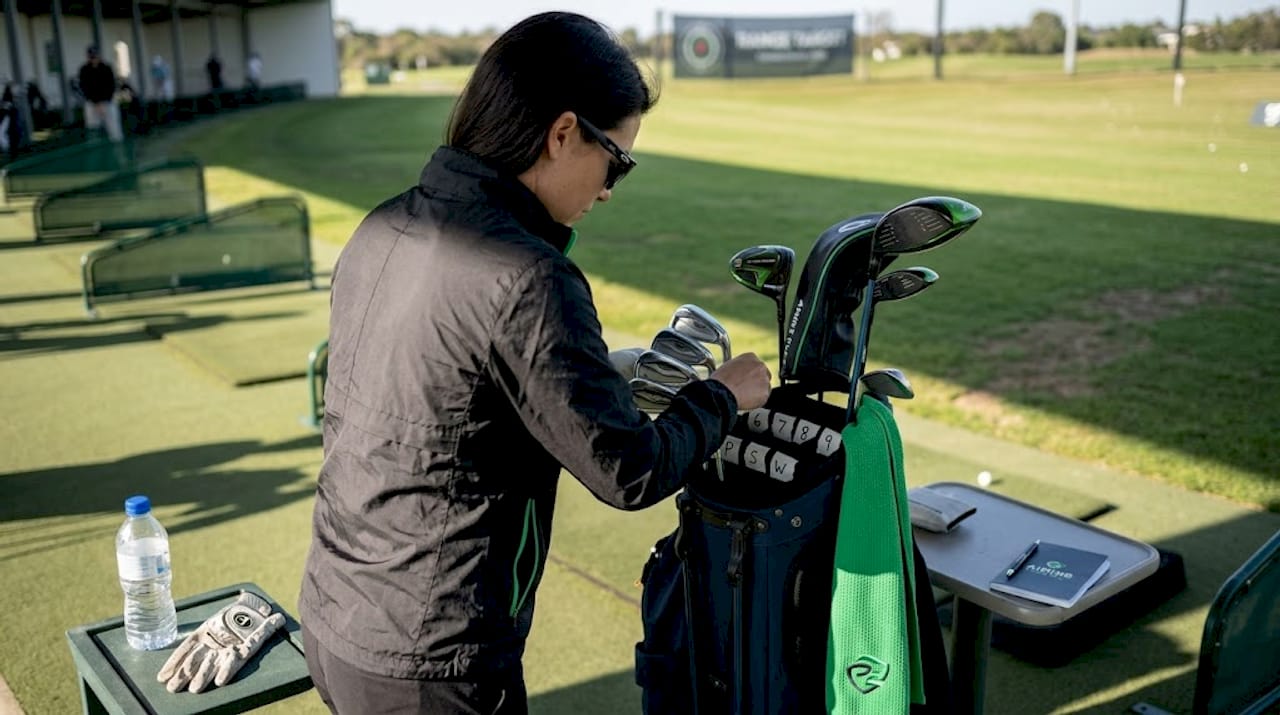
The Callaway 14-way bag is one example of a design that integrates a magnetic top pocket with individual club channels, offering both quick access and organized storage in a single system.
Pro Tip: Label your divider slots with a small piece of tape and a marker during your first setup. This creates a visual reference that makes it immediately obvious when a club is missing or misplaced, especially useful during mid-round rotations.
Advanced rotation tactics for competitive golfers
Once the basic setup routine is consistent, competitive golfers need a higher level of precision. Tournament preparation requires analyzing distance gaps between clubs, adjusting for specific course conditions, and tracking which clubs are performing at their best.
Core advanced rotation practices:
- Gapping analysis. Measure the distance output of every club in your bag. Identify any gaps larger than 15 yards between consecutive clubs and fill them with a hybrid or additional wedge. A gap between your 5-iron and 7-iron, for example, is a scoring liability on approach shots.
- Condition-specific swaps. Firm, fast courses often reward lower-lofted clubs that run out after landing. Soft courses with heavy rough demand higher-lofted options that stop quickly. Adjust your wedge selection and hybrid configuration accordingly before each event.
- Specialty club rotation. Driving irons, 2-irons, and low-lofted utility clubs serve specific purposes on tight courses or in windy conditions. Carry them when the course demands precision over distance, and rotate them out when the layout rewards length.
- Inventory tracking. Use a dedicated golf app or a simple spreadsheet to log which clubs you carry each round, how often you use each one, and which swaps produced the best results. Over time, this data reveals patterns that improve future rotation decisions.
As noted in setup guidelines from Sir Lanserlot Golf, competitive golfers customize for gapping and conditions while using apps for inventory and rotation tracking. This systematic approach removes guesswork from club selection and replaces it with repeatable, data-driven decisions.
“The golfer who knows exactly what each club does in their bag, and why it is there, has a structural advantage before the round even starts.”
Reviewing gapping and custom fitting data is particularly valuable for golfers transitioning from amateur to competitive play. Many players discover that their perceived distance gaps are inaccurate once they measure actual carry distances under controlled conditions.
One common error at the competitive level is over-rotating. Changing too many clubs between rounds creates inconsistency in feel and timing. A disciplined rotation policy limits swaps to two or three clubs per event, based on specific course data rather than general preference. Reviewing competitive golf essentials helps establish which accessories and club configurations consistently support performance at higher levels.
Pro Tip: After each competitive round, spend five minutes logging which clubs you used most, which you never touched, and whether any distance gaps created problems. Three rounds of this data will reveal your actual rotation needs with much more accuracy than intuition alone.
Troubleshooting common mistakes and optimizing your routine
Even golfers with good intentions make recurring errors in gear rotation and organization. Recognizing these patterns early prevents them from becoming ingrained habits that cost strokes over time.
Most frequent mistakes:
- Placing clubs by habit rather than logic. Many golfers put clubs back wherever they fit rather than in their designated slot. Over a full round, this creates a scrambled bag that slows every retrieval.
- Overcrowding accessory pockets. Stuffing too many items into a single pocket makes every item harder to find. Assign specific pockets to specific items and enforce that assignment consistently.
- Skipping pre-round inventory. Arriving at the first tee without confirming your full 14-club count is a risk. Missing a club mid-round forces improvisation at the worst possible moments.
- Ignoring grip and shaft contact. Clubs that rattle against each other during cart transport wear down grips and create micro-damage on shafts over time. Full-length dividers are not optional for golfers who care about equipment longevity.
- Rotating clubs without tracking outcomes. Making swaps based on feel rather than data leads to circular decisions. You end up rotating the same clubs in and out without ever knowing which configuration actually performs better.
As outlined in 14-way bag setup guidance, amateurs should focus on protection and access, while competitive players should customize for gapping and conditions and use apps for inventory and rotation tracking. Both groups benefit from a structured approach, just at different levels of complexity.
Applying retrieval time reduction tips consistently will produce measurable improvements in pace of play. Faster retrieval means less time standing over the bag, more time reading the course, and a smoother mental transition between shots.
For long-term efficiency, review your bag setup every four to six rounds. Conditions change, your game evolves, and the clubs that served you well in spring may not be the right choices for summer firm conditions. Consulting gear preparedness best practices provides a reliable framework for keeping your setup current without over-engineering it.
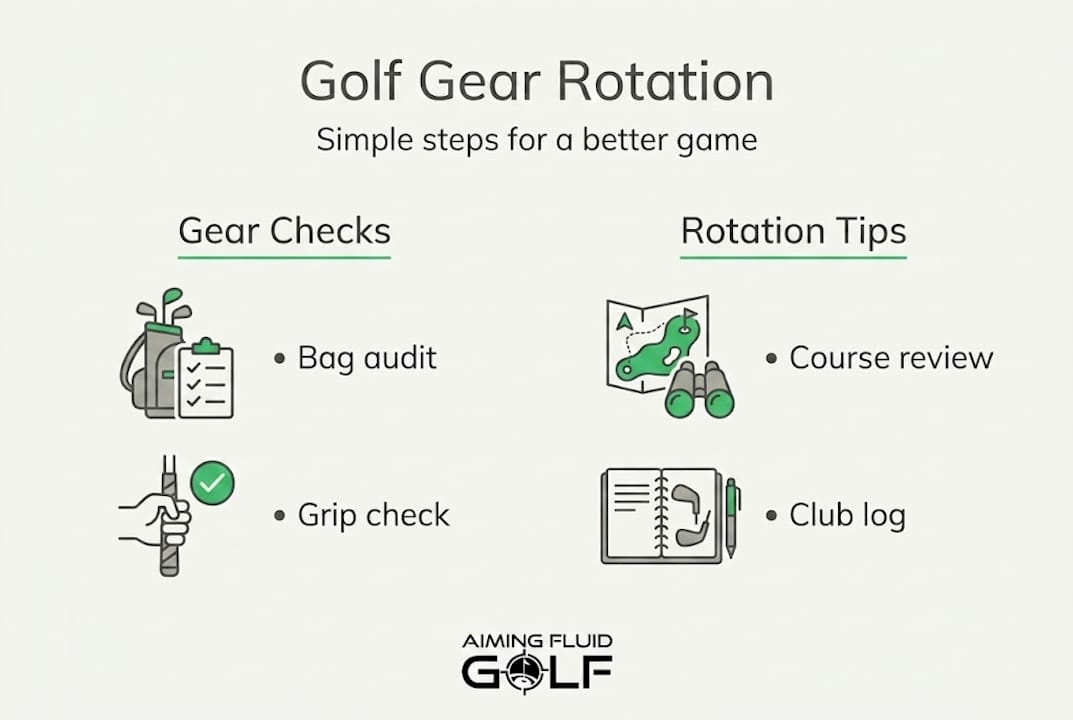
Pro Tip: Set a recurring calendar reminder every six weeks to do a full bag audit. Pull every club, check grip condition, verify your accessory pockets are stocked, and confirm your rotation choices still match your current game.
Why most golfers overlook gear rotation—and how it truly changes your game
The honest reason most golfers ignore rotation is that it requires effort before the round even starts. Golf already demands enough mental energy on the course. Pre-round preparation feels like extra work, so it gets skipped. The result is a static bag setup that made sense six months ago but no longer reflects how the player actually hits the ball or what the courses they play actually require.
What we have observed is that golfers who commit to even a basic rotation system—reviewing their 14 clubs before each round and making one or two intentional swaps based on the course—report noticeably better confidence standing over approach shots. The reason is mechanical, not psychological. When you know exactly which club fills a specific yardage gap, you commit to the shot instead of second-guessing your selection.
The deeper insight is that rotation is not about constantly changing your bag. It is about maintaining intentionality. A golfer who carries the same 14 clubs every round but has consciously chosen each one based on their game is already practicing rotation at its most fundamental level. The problem is the golfer who carries the same 14 clubs out of inertia, never questioning whether each one still earns its place.
Reviewing gear management perspectives reinforces a key principle: the bag is a performance tool, not a storage container. Every slot, every pocket, and every accessory position should serve a specific function. When it does, the bag supports your game. When it does not, it creates friction at exactly the moments when clarity matters most.
The next step: Upgrade your golf game with high-performance accessories
Mastering gear rotation and bag organization is a significant step, but the right accessories make the system work reliably round after round.
Aiming Fluid Golf designs accessories specifically for golfers who take organization seriously. From the best golf accessories curated for cart and carry setups, to the top divot tool built for durability and fast green repair, every product is engineered to reduce friction and keep you focused on the shot ahead. The premium leather golf pouch adds a dedicated, secure zone for valuables that clips directly to your bag with a 360-degree metal clip, eliminating the need to dig through pockets mid-round. These tools are built for golfers who want their setup to work as hard as they do.
Frequently asked questions
How do I decide which clubs to rotate into my golf bag?
Choose clubs based on course layout, weather conditions, and recent performance data. As Golf Monthly notes, rotation decisions should reflect course conditions and performance data, with hybrids and wedges adjusted specifically for distance gapping.
What is the best way to organize a 14-way golf bag for quick access?
Arrange clubs sequentially from driver and woods at the top to wedges and putter at the bottom. Per established 14-way bag setup guidelines, each club should occupy its own full-length divider channel for maximum protection and retrieval speed.
What accessories help maintain efficient gear rotation?
Full-length dividers, utility pouches, magnetic towels, and inventory tracking apps are the core tools. Setup guidance confirms that apps for inventory tracking are particularly effective for competitive golfers managing frequent rotation decisions.
How can I prevent common mistakes in gear rotation?
Review your bag setup before every round, limit swaps to two or three intentional changes per event, and use tracking data to evaluate outcomes. Customizing for gapping and conditions with a consistent review process eliminates most recurring rotation errors.


