


The Aiming Fluid 5-in-1 Multi-Tool combines five on-course functions, a corrosion-resistant finish, and an integrated magnetic ball marker into a single pocket-sized instrument. It is designed to handle divot repair, ball marking, groove cleaning, bottle opening, and secure carry without adding bulk to your bag, the 5-in-1 is the direct answer. The USGA encourages every golfer to repair pitch marks on greens, and the right tool makes that habit effortless. Amazon Best Sellers data confirms that multi-function 4–6-in-1 designs now dominate the divot tool market, reflecting exactly what golfers actually want to carry.
Key Takeaways
The Aiming Fluid 5-in-1 Multi-Tool is the strongest choice for golfers who want a single, durable instrument that handles divot repair, ball marking, and groove cleaning without adding clutter to their bag.
| Point | Details |
|---|---|
| Best pick for most golfers | The Aiming Fluid 5-in-1 covers five functions with a bonded magnetic ball marker and corrosion-resistant finish. |
| Material determines longevity | Stainless steel resists corrosion best; brass ages attractively but needs more upkeep in humid coastal conditions. |
| Correct repair technique matters | Insert prongs at 45 degrees at the mark’s edge and push inward; never pry upward, which tears root structure. |
| Price range for multi-function tools | Multi-function 4–6-in-1 divot tools typically sell for $15–$30 in the U.S. market. |
| Buy direct for warranty support | Purchasing from Aimingfluidgolf directly gives you brand-backed replacement and return support. |
Table of Contents
- What are the best golf divot tools, and what does the 5-in-1 offer?
- Which materials and finishes last longest on U.S. courses?
- How do you choose between single, multi-function, and premium divot tools?
- How do you use a divot tool correctly to repair greens?
- How do you care for a metal divot tool so it stays functional?
- What does a divot tool cost, and where do you buy one in the U.S.?
- Why does the Aiming Fluid 5-in-1 stand out from other divot tool options?
- A note on what actually matters in divot tool design
- The Aiming Fluid 5-in-1 is available now with direct U.S. shipping
- Sources
What are the best golf divot tools, and what does the 5-in-1 offer?
A multi-function divot tool consolidates several accessories into one compact body. The canonical functions buyers expect are: a prong repair head, a magnetic ball marker, a groove cleaner, a bottle opener, and a carry mechanism such as a pocket clip or keychain loop. Single-purpose tools do one job cleanly, but they require you to carry separate items for each task. Multi-function designs solve that directly.
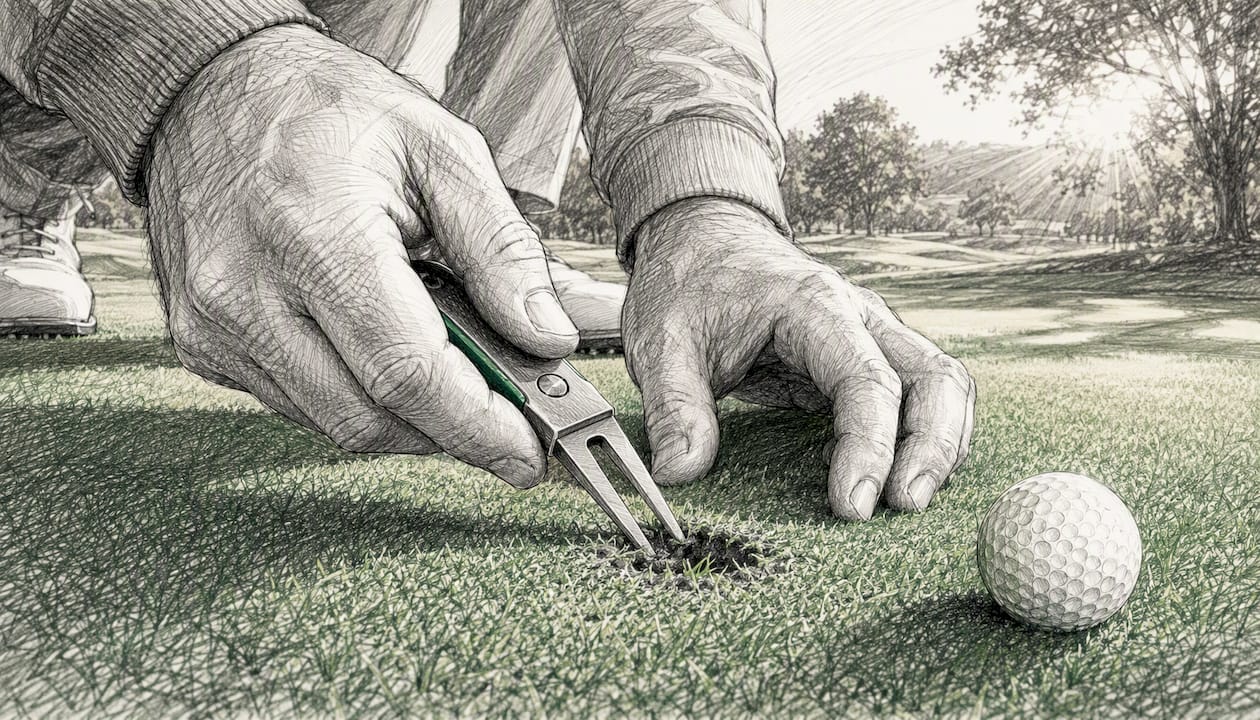
The Aiming Fluid 5-in-1 maps to all five of those functions. Its magnetic ball marker sits flush against the body and releases cleanly with one motion, so you are not fumbling with a separate coin on the green. The pocket clip keeps the tool accessible on a waistband or bag strap rather than buried in a pocket.
Ergonomics matter here. A tool that is too heavy or too wide creates fatigue when you reach for it repeatedly over 18 holes. The 5-in-1 is sized to sit naturally between thumb and forefinger, with enough weight to feel substantial without pulling at a shirt pocket.
Which materials and finishes last longest on U.S. courses?
Material choice determines how a divot tool ages over years of sun, rain, and cart-bag vibration.
- Stainless steel offers the strongest corrosion resistance and holds its finish on humid coastal courses without special upkeep. It is the most practical choice for golfers who play year-round in wet climates.
- Brass develops a warm patina over time, which many golfers find attractive. It requires occasional polishing in salt-air environments to prevent surface oxidation.
- Zinc alloy is lighter and less expensive, but thinner castings can flex under pressure and the plating can chip at stress points after extended use.
- Anodized aluminum is featherweight and holds color well, though the anodized layer can scratch through to bare metal if the tool contacts abrasive surfaces repeatedly.
Hardware quality deserves attention beyond the body material. Inspect the magnet retention method: a magnet that is press-fit into a shallow recess will eventually work loose, while one that is recessed and bonded holds its pull force through years of use. Pins and hinges on folding designs should move without play or wobble.
Pro Tip: When reviewing product photos, look for visible plating thickness at the edges of the body. Thin plating shows as a color difference at corners and machined edges. A uniform finish across the entire surface, including cut edges, indicates heavier plating that will resist chipping far longer on humid courses.
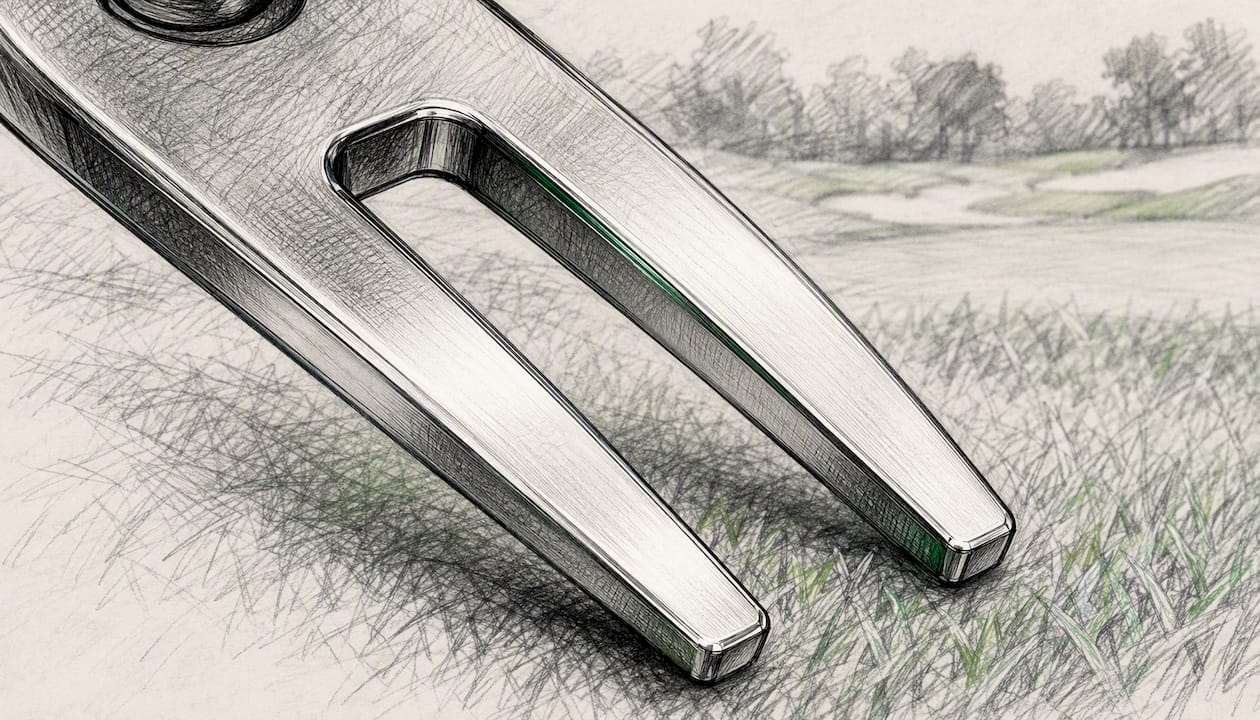
Prong style also affects turf health. Rounded tips, sometimes described as CNC-milled round ends, push turf back toward center without tearing root structure. Sharp prongs can sever roots if the repair motion is incorrect, which is why agronomy-focused manufacturers specify tip geometry in their product descriptions.
How do you choose between single, multi-function, and premium divot tools?
Start with your priority. If you play two or three times a week and want one item that handles every small on-course task, a multi-function tool is the correct category. If you carry a separate ball marker, groove brush, and bottle opener already, a single-purpose tool may be all you need. Premium style tools, often machined from solid brass or stainless with custom finishes, serve golfers who treat their accessories as part of a coordinated kit.
Questions to ask before purchasing:
- What is the body material and plating thickness?
- How is the magnet retained, and what is the rated pull force?
- Does the tool include a carry mechanism, or is it pocket-only?
- What is the warranty: limited lifetime, one year, or 30-day return only?
- Does the seller support direct returns, or does everything route through a marketplace?
Red flags: a magnet that spins freely in its housing, a body that flexes noticeably when you press the prongs against a hard surface, and product listings that describe the material only as “metal alloy” without specifying the base material or plating process. Unclear warranty language, such as “satisfaction guaranteed” with no stated replacement process, is another signal to look elsewhere.
How do you use a divot tool correctly to repair greens?
The USGA asks every golfer to repair pitch marks, and the correct technique matters. An improperly repaired mark can take weeks to heal; a correctly repaired one recovers in 24 hours.
- Insert the prongs at the outer edge of the depression, angled inward at roughly 45 degrees, not straight down.
- Push the turf toward the center of the mark using a gentle, levering motion. Do not lift or pry upward, which tears root structure.
- Repeat around the perimeter, working in a circle until the surface is level.
- Tap the repaired area lightly with your putter face to smooth the surface.
- Step back and confirm the surface is flush with the surrounding green.
For step-by-step divot repair guidance, Aimingfluidgolf’s own how-to resource covers the technique in detail.
On-course etiquette:
- Repair your own mark and one additional mark nearby if time allows.
- Never use your fingertips alone on soft greens; a tool distributes force more evenly.
- Repair before you putt, not after, so the surface is ready for playing partners.
- If pace is tight, a quick three-point repair is better than skipping it entirely.
How do you care for a metal divot tool so it stays functional?
Metal divot tools are low-maintenance, but a few habits extend both function and appearance significantly. Cleaning golf equipment with warm soapy water and a soft brush is the correct method for metal accessories, and the same principle applies to your divot tool. Rinse thoroughly and dry immediately; water left in crevices around the magnet housing accelerates oxidation even on stainless steel.
Avoid wire brushes and harsh solvents, which strip plating and can degrade the adhesive bonding a recessed magnet. A light clean after each round and a more thorough rinse every few rounds keeps the tool looking and functioning as intended.
Storage matters more than most golfers expect. A dry pocket or a leather utility pouch protects the finish from abrasion against tees and coins. Avoid leaving metal tools in a hot car trunk for extended periods; thermal cycling loosens bonded components over time. Keep the tool away from electronics when the magnet is strong enough to affect them, though most divot tool magnets operate well below that threshold.
For in-round care, a quick wipe with a damp towel after use removes grass and soil before they dry and harden in the prong channel.
What does a divot tool cost, and where do you buy one in the U.S.?
Multi-function divot tools in the 4–6-in-1 category typically sell in the $15–$30 range depending on material and brand. Single-prong tools run $5–$12. Premium machined or custom-finished tools can exceed $30.
- Brand storefronts (direct-to-consumer): best for warranty support, direct returns, and access to bundles. Aimingfluidgolf ships direct across the U.S.
- Amazon: convenient for Prime shipping, but warranty claims route through the seller rather than the brand, which can slow resolution.
- Pro shops: useful for handling the tool before purchase, but selection is limited and prices are typically higher.
Routine equipment care and long-term maintenance habits reduce total ownership cost across all your gear, and the same logic applies to accessories. A $25 tool that lasts five years costs less than replacing a $10 tool annually.
Expect standard U.S. shipping of 3–7 business days from most brand storefronts. Warranty language to look for: “replacement on defect” or “limited lifetime” coverage is meaningfully stronger than a 30-day return window with no stated defect policy.
Why does the Aiming Fluid 5-in-1 stand out from other divot tool options?
Aimingfluidgolf builds accessories around a magnetic design system rather than treating each product as a standalone item. The 5-in-1 Multi-Tool fits that philosophy: its integrated magnetic ball marker uses the same pull-force logic as the brand’s magnetic towel system, where reliable magnet retention is a design requirement, not an afterthought.
The five functions: divot repair prongs, magnetic ball marker, groove cleaner, bottle opener, and pocket clip. The finish is specified for corrosion resistance, and the magnet is recessed and bonded rather than press-fit. Aimingfluidgolf supports direct returns and replacement on defect, which is the warranty structure that matters most when you are buying a tool you intend to carry every round.
The brand’s full accessory lineup reflects the same organizational logic: reduce the number of items you search for during a round, and every item you do carry works reliably.
A note on what actually matters in divot tool design
The divot tool market is crowded with products that list five or six functions in the title and deliver three of them adequately. The functions that actually get used every round are the repair prongs and the ball marker. Everything else is a bonus.
What separates a tool you reach for automatically from one that stays in the bag is the magnet. A ball marker that releases cleanly with one hand, in one motion, on the green, is a functional advantage. A marker that requires two hands or a fingernail to separate from the body is a friction point that accumulates over 18 holes. Aimingfluidgolf’s design priority on magnet retention addresses exactly that failure mode.
The second underappreciated factor is prong geometry. A rounded tip that pushes turf rather than cuts it is not a marketing claim; it is an agronomy outcome. Greens repaired correctly with rounded tips recover faster, which is why course superintendents prefer them.
The Aiming Fluid 5-in-1 is available now with direct U.S. shipping

Aimingfluidgolf ships the 5-in-1 Multi-Tool direct to U.S. customers, which means warranty claims and returns go straight to the brand rather than through a marketplace intermediary. The tool covers five on-course functions in one carry item, built to the same magnet-retention standard as the rest of the Aimingfluidgolf accessory system. Visit the 5-in-1 product page to review current pricing, available finishes, and shipping options. If you want to see how the 5-in-1 fits into a broader gear setup, the expert accessory guide covers the full lineup.
Sources
- How to Clean Golf Clubs: Irons, Woods & Grips
- Maintaining Golf Clubs
- How to Clean Golf Clubs
- Best Golf Divot Tools
- Golf Clubs Are Expensive: How to Take Care of Them in 2026
- Essential Tips to Maintain Your Golf Equipment
Recommended
- The Best Tool in a Golfer’s Bag - The Divot Tool – Aiming Fluid Golf
- Why a Divot Tool is Essential for Golfers – Aiming Fluid Golf
- How to Use a Golf Divot Tool Like a Pro | Step-by-Step Guide – Aiming Fluid Golf
- Blue Tees 6-in-1 Divot Repair Tool: Magnetic Marker & Groove Cleaner – Aiming Fluid Golf


