


TL;DR:
- The most common golf swing faults are trail arm lift, head sway, and pelvis errors, with trail arm lift being the most prevalent. Correcting pelvis movement first yields faster score improvements, followed by trail arm lift, and finally head sway. Proper equipment matching and strategic course management are essential for reducing mistakes and enhancing performance.
The most common golfing mistakes are rooted in three fundamental swing faults: trail arm lift, head sway, and poor pelvis movement. These faults disrupt power, accuracy, and ball contact for golfers at every skill level. Analysis of 27,576 swings confirms that trail arm lift appears in 53.4% of amateur swings, making it the single most prevalent mechanical error in recreational golf. Fixing these faults, along with grip, timing, and course management errors, produces the fastest and most measurable score improvements.
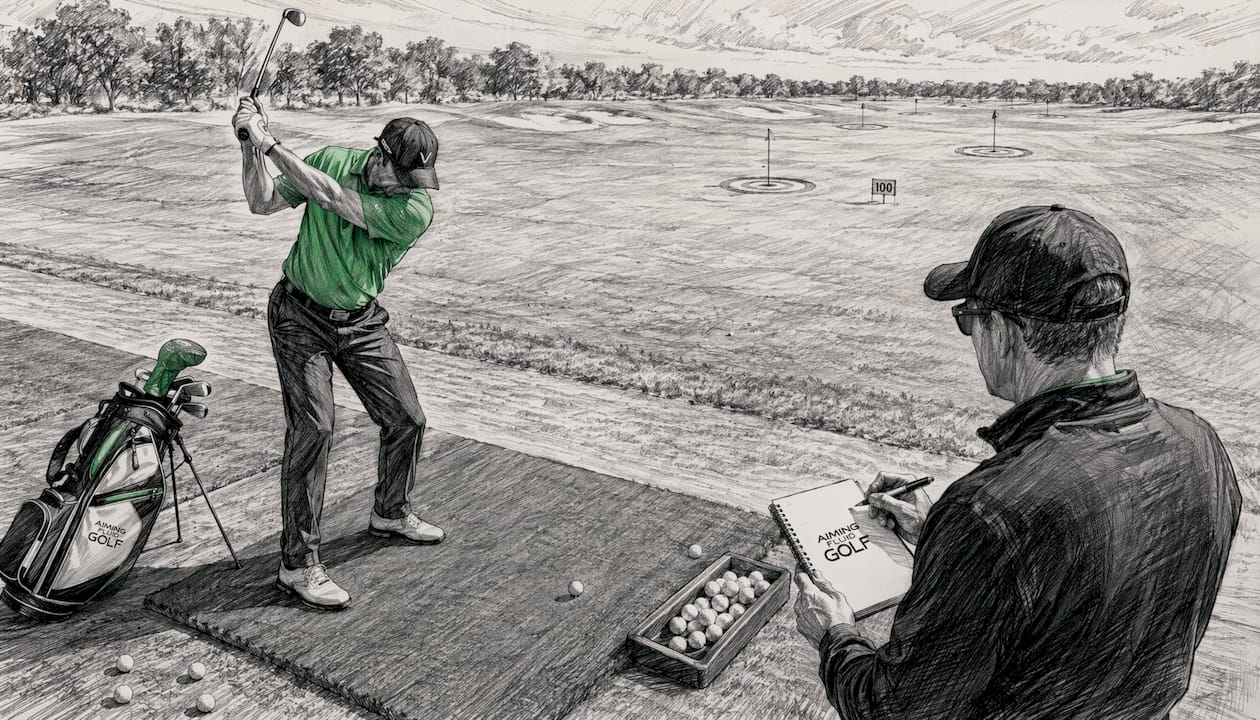
1. What are the most common golf swing faults?
The three most frequent swing faults in the common golfing mistakes list are trail arm lift, head sway, and pelvis magnitude errors. Each one has a distinct biomechanical cause and a different correction difficulty level.
Trail arm lift occurs when the rear arm lifts away from the body during the backswing. This disconnects the downswing sequence and forces the club onto an incorrect path. Trail arm lift affects 53.4% of amateurs, yet only 33% of correction attempts improve performance. That low fix rate means most golfers need structured drills, not just awareness.
Head sway is the movement of the head laterally during the swing. Head sway occurs in 41.2% of amateur swings and is the hardest fault to correct. When the head moves 2 or more inches, 81% of resulting shots are fat. Over 60% of amateurs move their head this much without realizing it.
Pelvis magnitude errors involve the hips thrusting forward on the downswing instead of rotating. This raises the body and pulls the club upward, causing thin shots. Early extension appears in over 55% of golfers with handicaps above 15 and causes thin contact in 64% of cases. The good news: pelvis movement is the most correctable of the three faults.
| Fault | Prevalence | Primary Result | Fix Difficulty |
|---|---|---|---|
| Trail arm lift | 53.4% of amateurs | Disconnected downswing | Moderate |
| Head sway | 41.2% of amateurs | Fat shots | Hard |
| Pelvis thrust | 55%+ (15+ handicap) | Thin shots | Easiest |
Pro Tip: Fix pelvis movement first, then trail arm lift, and address head sway last. This sequence gives you the best return on practice time.
2. How do grip and posture mistakes degrade your swing?
Grip and posture errors are among the most overlooked beginner golfing pitfalls. They do not look dramatic, but they cause consistent mishits and rob the swing of speed.
Grip pressure is the most common culprit. A grip pressure of 5/10 allows full wrist hinge without losing control. Gripping tighter kills wrist hinge and forces an early release, which costs distance. A reliable sign of overgripping is a worn golf glove near the palm. If your glove wears out there first, you are squeezing too hard.
Common grip and posture errors include:
- Overgripping: Tension above a 6/10 restricts wrist hinge and reduces clubhead speed.
- Looking up too early: Looking up before impact causes the upper body to rise, leading directly to topped shots.
- Improper weight distribution: Too much weight on the back foot at address promotes a reverse pivot and weak contact.
- Rounded posture: Slouching at address shortens the swing arc and limits hip rotation.
- Grip too far in the palm: The club should sit in the fingers, not the palm, to allow proper hinge.
Pro Tip: Hold the club as if you are gripping a tube of toothpaste without squeezing any out. That mental image keeps tension out of your hands and forearms.
Posture corrections are fast to implement and produce immediate results. Set up with a straight spine, slight knee flex, and your weight centered over the balls of your feet. That foundation alone eliminates several common golf errors before the swing even starts.
3. What swing path and timing mistakes cause slices and hooks?
Swing path and timing faults are responsible for the most frustrating shot patterns in golf: slices, hooks, and complete loss of distance.
The over-the-top downswing is the leading cause of slices. Over-the-top path causes slices in 73% of cases. The fault starts when the upper body fires first on the downswing instead of the lower body leading. The club travels outside the target line and cuts across the ball at impact, producing left-to-right spin for right-handed golfers.
Casting, also called early release, is the second major timing fault. Casting results from improper sequencing where the upper body starts the downswing before the lower body, forcing the hands to throw the club early. This releases the wrist hinge too soon, eliminating the lag that generates power. The result is weak, high shots with no penetrating ball flight.
“Changing mechanics mid-round often hurts more than helps. Focus on a free, tension-free swing that relies on good sequencing instead of manipulation.” This principle applies directly to timing faults: the fix is sequencing, not hand manipulation.
Common swing path and timing errors to correct:
- Over-the-top move: Start the downswing by pushing the lead hip toward the target, not by pulling the arms down.
- Early release: Maintain wrist hinge until the hands reach hip height on the downswing.
- Rushing the transition: Pause briefly at the top of the backswing to let the lower body lead.
- Swinging too hard: Maximum effort produces tension, which destroys tempo and path consistency.
For structured drills on path and tempo correction, the swing path correction guide at Aimingfluidgolf covers alignment aids and training tools that reinforce correct movement patterns.
4. What strategic and mental mistakes hurt your score?
Swing improvements mean little if course management decisions consistently put you in trouble. Strategic and mental errors are a major part of any complete golf mistakes to avoid list.
- Playing the wrong tees. Tees that are too long force low-handicap shots from a high-handicap skill set. Playing appropriate tees keeps the game enjoyable and produces realistic scoring opportunities.
- Aiming at the flag. Professional golfers miss the target green 40% of the time. Amateurs who aim at pins dramatically increase their double bogey risk. Aiming at the center of the green accounts for real shot dispersion and reduces pressure-induced mishits.
- Skipping the warm-up. Walking straight to the first tee without hitting practice balls or stretching produces cold, stiff swings. The first three holes become a warm-up, which costs strokes.
- Ignoring shot tracking. Mid-handicappers who ignore shot tracking and course strategy score worse despite swing improvements. Knowing where you actually miss shots is more useful than guessing.
- Emotional decision-making. Trying to recover a lost stroke with a hero shot from the trees compounds the problem. Taking the safe route and accepting a bogey beats a double or triple.
- No pre-shot routine. Inconsistent setup leads to inconsistent results. A repeatable routine, even a short one, anchors focus and reduces tension before each shot.
Course management strategies for amateur golfers cover how to build a consistent pre-round and on-course decision framework that supports lower scores.
5. How does equipment choice affect common golf errors?
Equipment mismatches are a quiet contributor to top golfing blunders. Most golfers underestimate how much the wrong gear amplifies existing swing faults.
Using a ball that does not match your swing speed is one of the most common equipment errors. High-compression balls require fast swing speeds to compress properly. Golfers with slower swing speeds using high-compression balls get less distance and less feel around the greens. A softer, lower-compression ball produces better results for most recreational players.
Shafts that are too stiff or too flexible cause directional inconsistency. A shaft that is too stiff for your swing speed produces weak, low shots. A shaft that is too flexible causes the clubface to close or open at impact, producing hooks or slices that look like swing faults but are actually equipment problems.
Gear organization also affects performance. When your bag feels like a junk drawer, you waste time and mental energy finding clubs and accessories. Aimingfluidgolf’s magnetic towel and landing pad system keeps your towel accessible without digging through your bag between shots. That kind of on-course efficiency keeps your focus on the shot, not the gear.
Pro Tip: Get a basic club fitting before blaming your swing. A fitting takes 30 minutes and often reveals that shaft flex or lie angle is causing the miss, not your mechanics.
For golfers who want to avoid common gear packing mistakes, Aimingfluidgolf covers the preparation errors that quietly affect performance before you even reach the first tee.
6. What beginner-specific pitfalls slow improvement the most?
Beginners face a specific subset of golf mistakes that compound quickly if left unaddressed. Identifying them early prevents bad habits from becoming permanent.
The most damaging beginner golfing pitfall is trying to fix too many things at once. Beginners who work on grip, posture, swing path, and tempo simultaneously make no lasting progress on any of them. Focused practice on one fault at a time produces measurable results. The top beginner golf mistakes guide at Aimingfluidgolf breaks this down by fault type and skill stage.
Beginners also tend to practice only full swings. Short game shots, including chipping and putting, account for roughly half of all strokes in a typical round. Spending 80% of practice time on the driving range and 20% on the short game is the reverse of what produces the fastest score improvement.
Finally, beginners rarely use alignment rods or training aids during practice. Practicing without feedback locks in incorrect patterns. Two alignment rods on the ground, one for the target line and one for foot alignment, give immediate visual confirmation that setup is correct before every practice swing.
Key Takeaways
Fixing the right golf mistakes in the right order, starting with pelvis movement and grip pressure, produces faster score improvements than working on all faults simultaneously.
| Point | Details |
|---|---|
| Fix pelvis movement first | Pelvis thrust is the most correctable fault and appears in 55%+ of higher-handicap golfers. |
| Keep grip pressure at 5/10 | Overgripping kills wrist hinge and causes early release, costing distance and control. |
| Aim at center of green | Pros miss greens 40% of the time; amateurs who aim at pins increase double bogey risk. |
| Sequence before manipulation | Over-the-top and casting faults both stem from sequencing errors, not hand position. |
| Match equipment to your swing | Wrong shaft flex and ball compression amplify swing faults and look like mechanics problems. |
What I have learned from fixing golf swing faults
After spending years watching golfers work through swing corrections, the pattern is clear: most players attack the wrong fault first. Head sway is the most visible and the most frustrating to fix. Golfers spend months on it and see little progress because the underlying cause is often the pelvis fault, not the head itself. Fix the pelvis, and the head often stabilizes on its own.
Trail arm lift is the most common fault in the data, but it is also the one most golfers can feel once they know what to look for. A simple drill, keeping a headcover under the trail arm during the backswing, gives immediate feedback without any complicated thought process.
The mental game section of this list is the one most golfers skip. Aiming at the center of the green feels like giving up. It is not. It is the same strategy tour professionals use when the risk of a pin-high shot outweighs the reward. Trusting that strategy requires accepting that good process matters more than one spectacular shot.
The golfers who improve fastest are the ones who track their misses, practice with feedback tools, and make one change at a time. Patience is not a soft skill in golf. It is the actual mechanism of improvement.
— Gary
Gear that supports your improvement on the course
Fixing swing faults takes focused practice. Staying organized on the course keeps that practice from unraveling during a round.

Aimingfluidgolf designs accessories built around one principle: your gear should never interrupt your focus. The magnetic towel system attaches and detaches in one motion, so your club is clean and your attention stays on the next shot. Precision tees, divot tools, and utility pouches keep every essential item in a fixed, accessible location. When your setup is consistent, your pre-shot routine is consistent. Browse the full selection of expert-picked golf accessories at Aimingfluidgolf to find gear that matches how you play and practice.
FAQ
What is the most common golf swing fault?
Trail arm lift is the most common swing fault, appearing in 53.4% of amateur swings based on analysis of 27,576 swings. It disconnects downswing sequencing and leads to weak ball striking.
How do I stop slicing the ball?
An over-the-top downswing path causes slices in 73% of cases. Fix it by initiating the downswing with your lead hip moving toward the target, not by pulling your arms down.
What grip pressure should I use in golf?
A grip pressure of approximately 5 out of 10 allows full wrist hinge without losing control. Gripping tighter causes early release and reduces clubhead speed.
Should I aim at the flag or the center of the green?
Aim at the center of the green. Professional golfers miss their target green 40% of the time, and amateurs who aim at pins significantly increase their double bogey risk.
What golf mistakes should beginners fix first?
Beginners should fix pelvis movement and grip pressure before addressing head sway or trail arm lift. These two corrections produce the most immediate improvement in ball contact and shot consistency.
Recommended
- 9 Simple Golf Tips to Instantly Improve Your Game (Rick Shiels Breakdo – Aiming Fluid Golf
- Step-by-step golf practice routine: improve fast – Aiming Fluid Golf
- The 4-Hour Round Manifesto: Gear & Habits for Fast Play – Aiming Fluid Golf
- Top Beginner Golf Mistakes That Kill Your Score (And How to Fix Them) – Aiming Fluid Golf


